



How to Sell Your Crafts in a Consignment Shop: A Beginner-Friendly Guide
If you’re a handmade creator looking to get your products into a physical store without opening your own storefront, consignment shops can be an incredible opportunity. They allow you to showcase your products to new customers, build your brand, and generate income—without the overhead of running a retail space. Whether you make soaps, candles, jewelry, or home goods, this guide will walk you through how to successfully sell your crafts in a consignment shop.
🧠 What Is Consignment (and How It Works)
Consignment means a shop agrees to display and sell your products, but you don’t get paid until the item sells. The shop takes a percentage of the sale (typically 20–50%), and you receive the remaining portion.
👉 Example:
If your item sells for $20 and the shop takes 40%, you receive $12.
This setup allows shops to offer a variety of handmade goods without upfront inventory costs—and gives makers a chance to get into retail spaces.
I live in a rural area. Most of the consignment setups I have experienced are a 20% rate. But I'm sure in larger, more populated area the rates may be higher.
🛠 Step 1: Make Sure Your Products Are Retail-Ready
Before approaching a shop, your products should look polished and professional.
✔ Consistent branding (labels, colors, logo)
✔ Clear product names and descriptions
✔ Ingredient lists (especially for skincare or food items)
✔ Pricing that supports both you and the shop’s commission
✔ Durable, attractive packaging
👉 Think: “Would I expect to see this in a boutique?”
💰 Step 2: Price for Profit (Don’t Undersell Yourself)
This is where many makers struggle.
Use this simple formula:
- Wholesale/consignment pricing should still cover:
- materials
- time
- overhead
- profit
👉 A common model:
- Retail price = 2x your cost
- Then split with the shop
Make sure you’re not losing money after the shop takes their percentage.
📦 Step 3: Prepare a Simple Line Sheet
A line sheet is a one-page overview of your products.
Include:
- Product photos
- Names and prices
- Short descriptions
- Your contact info
👉 This makes you look professional and easy to work with
🤝 Step 4: Approach the Right Shops
Not every store is the right fit.
Look for:
- Boutiques that match your style
- Shops that already carry handmade or natural goods
- Stores with a similar target customer
👉 If your brand is farmhouse/apothecary (like Calhoun Farmstead style), look for shops with that same vibe.
Some spaces I have had success setting up my products include:
Local wineries, gift shops, coffee shops, antique stores, and consignment shops.
💬 Step 5: How to Pitch Your Products
Keep it simple and friendly.
Example message:
Hi! I’m a local maker creating handmade [product type]. I love your shop and feel like my products would be a great fit for your customers. I’d love to connect about potential consignment opportunities!
👉 You can:
- Stop in person (best option)
- Email or DM if needed
📑 Step 6: Understand the Agreement
Before you commit, make sure you know:
- Commission percentage
- Payment schedule (weekly, monthly, etc.)
- Who handles damaged or stolen items
- How long items stay in-store
- Whether you need to restock regularly
- How sales tax is collected and paid
👉 Always get terms in writing
🔄 Step 7: Maintain and Grow the Relationship
Once you’re in, treat it like a partnership.
✔ Keep inventory stocked (very important)
✔ Refresh products seasonally
✔ Communicate with the shop owner
✔ Ask what sells best
👉 The better your products perform, the more space you may earn in the shop
🚀 Tips to Increase Your Sales in Consignment Shops
- Use eye-catching packaging
- Offer testers (for skincare, candles, etc.)
- Create seasonal or themed products
- Keep pricing consistent across all locations
- Promote the shop on your social media
⚠️ Common Mistakes to Avoid
❌ Pricing too low
❌ Inconsistent branding
❌ Not tracking your inventory
❌ Choosing the wrong shop
❌ Not following up or restocking
🌿 Final Thoughts
Selling your crafts in a consignment shop is one of the best ways to grow your handmade business, gain exposure, and connect with new customers—without the pressure of running your own storefront. With the right preparation, pricing, and partnerships, consignment can become a steady and rewarding sales channel.
If you’re a local maker looking to partner with a boutique that values handmade, natural products, keep an eye on opportunities at Calhoun Farmstead.
📍 Visit us in DuBois, PA (W. Park Ave & Liberty Blvd – free parking in back)
🌐 Learn more at www.calhounfarmstead.com
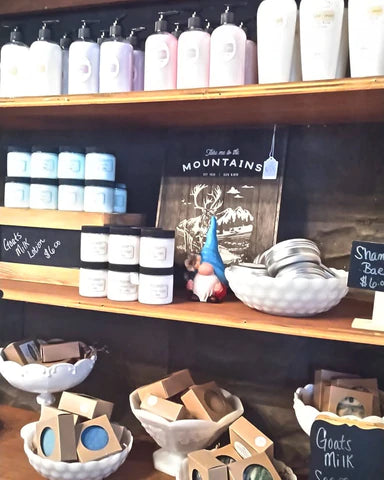
This is my soap display in a local winery store. Here they provide shelving and take a percentage of sales.
I